IMPOWER TRAINING
We are all exposed to the possibility of facing a violent criminal, Active Shooter or a terrorist someday. Every one of us is responsible for our own safety and the protection of loved ones.
There is a need for effective training that can help mitigate risks and improve individual preparedness.
IMPOWER™ training fulfill’s this need by providing comprehensive and affordable hybrid-training in Personal Protection and Survival.
The IMPOWER™ course teaches how to develop personal security plans that can be adopted at home or work and during travel. You will learn proven methods for recognizing potential risks and avoiding dangerous situations. You will understand how to use the surrounding environment to your advantage and how to work together as a team during an emergency. You will receive step-by-step instruction on how to apply the most effective protection tactics and last resort measures to survive extreme violence.
The IMPOWER™ courses include:
- Violence Survival
- Children Safety Education
- Kidnapping & Hijacking Survival
- Home Defense & Family Protection
- Community Preparedness & Emergency Response
- C3S IMPOWER Training (1-Day Class & Online Training) – $250 Per Person
R.E.A.C.T. TRAINING
The C3S solution that increases an organization’s and individual’s odds of survival during a violent intruder event.
R.E.A.C.T. stands for: Respond Effectively Against Criminal Threats.
You may have a plan in place for protecting your family at home or have some training in self-defense. However, have you considered the possibility of being confronted by a killer at work or at school? Would you know what to do to protect yourself and others if this happens? Are you a parent or grandparent of a high-school or college student? Do your children have the necessary training to survive an Active Shooter or terrorist attack on campus?
The repeat occurrence of Active Shooter and terrorist attacks remains a threat to public safety. The risk of violence in the workplace is a serious concern and schools are particularly vulnerable.
Specific preparation and advanced training are needed to address these threats effectively.
Understanding the warning signs reduce vulnerabilities and knowing how to respond effectively increases survivability during Active Shooter and terror incidents.
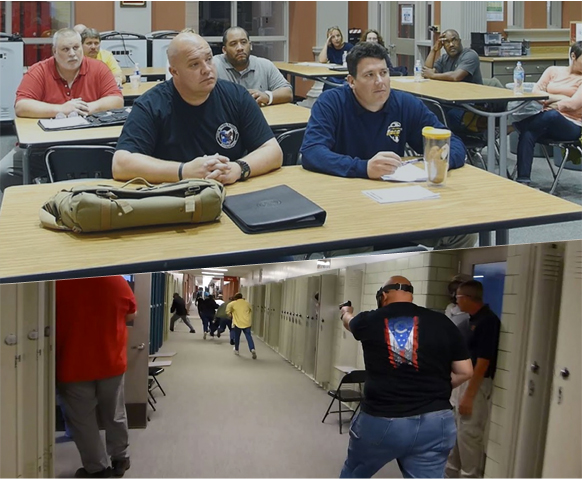
The C3S R.E.A.C.T. Training™ Extreme Violence Survival course provides the most comprehensive training in Personal Protection from Active Shooters and terrorist threats.
This course provides up-to-date information and practical guidelines for personal security and teaches step-by-step attack countermeasures that can save lives.
The information provided in this course is designed to enhance, complete or complement existing self-defense training and can be adapted at work and school or anywhere else.
The focus of the course curriculum is two-fold: protection and response.
Upon successful completion of R.E.A.C.T. Training™ Extreme Violence Survival course, you will master proven methods for recognizing signs of dangers and avoiding violence – greatly reducing the chances that you will ever be involved in a dangerous situation. You will also know exactly how to respond in the event of an attack to protect yourself and others.
In the R.E.A.C.T.™ Extreme Violence Survival course you will learn:
- The Survival Mindset and how to cultivate it.
- The 4 phases of the Violence Escalation Process.
- How to recognize someone who may be concealing weapons.
- In depth case studies and statistics of school and workplace violence incidents.
- Common violence trends and how knowing these trends may help you prevent violence.
- 4 easy to learn critical steps you must know in order to effectively respond to an emergency.
- What a Critical Time Gap (CTG) is and how knowing this could save lives, including your own.
- The tactics and techniques used by active shooters and what you can do to protect yourself.
- How to rapidly barricade a classroom or an office and prevent an active shooter from entering.
- What law enforcement may do during a crisis and the risks they may face in trying to help you.
- How to communicate essential information to first responders in an active shooter situation.
- How to safely interact with first responders and understand their instructions under duress.
- How to overcome the “Communication Challenge” and stay informed during a crisis.
- How to evacuate safely during active shooter and terrorist threats (not your typical fire drill).
- How to recognize the sound of gunfire and determine the location of shooter/s.
- Simple and effective, last resort, collective resistance and survival strategies to use when faced with an active shooter bent on destruction.
- C3S R.E.A.C.T. Training & Certification (2-Day Class) – $850 Per Person
S.A.F.E.T.Y. TRAINING
S.A.F.E.T.Y. stands for: Survival Aid For Every Teacher & Youth.
S.A.F.E.T.Y. training for civilians, is an adaptation of what the U.S. military calls Tactical Combat Casualty Care (TCCC)—a response to the realization that soldiers were dying on the battlefield from survivable wounds before they could make it to a hospital.
S.A.F.E.T.Y. training involves not just medical techniques, but threat recognition and situational awareness. The Army and Navy medical corps that established the TCCC guidelines divided care into three stages: 1) “care under fire”; 2) “tactical field care,” or “the care rendered by the medic or corpsman once he and the casualty are no longer under effective hostile fire” but have not yet been picked up for transportation to a medical center; and 3) “combat casualty evacuation care” once in a vehicle en route to a medical center.
C3S S.A.F.E.T.Y. Certification covers:
- Finding a safe place to administer first aid
- Blunt Trauma aid
- Tourniquet instruction knife stabbing and gunshot wounds
- Pressure dressings—to be applied after a tourniquet is in place, if the bleeding is not bad enough to require a tourniquet, or if the wound is in a location where using a tourniquet isn’t possible (anywhere not on the arms or legs).
- Addressing compromised airways by moving the patient into a better position or, in the case of a chest wound, buying time with what’s known as an “occlusive dressing”—an air-tight bandage that helps keep air from being sucked into the chest cavity, and displacing and deforming the lungs and heart.
- Positioning—that non-professionals can do to slow the onset of shock or delay swelling for bad head injuries.
- Practice- putting tourniquets and pressure dressings on each other—applications that can be quite painful for the patient, when done properly.
- NAEMT Certification